




Skip to content

Muzambiringa and UNCDF present

Sierra Leone Fintech Innovation Challenge 2026

Growing financial inclusion through agricultural innovation

We are looking for early-stage fintech and agri digital financial services (DFS) solutions that increase financial inclusion and improve economic outcomes for smallholder farmers and agri-SMEs in Sierra Leone. The Challenge will identify, support and showcase high-potential solutions that address the cash-flow, seasonality and access barriers of the agricultural value chain.

Applications close

20 November 2026

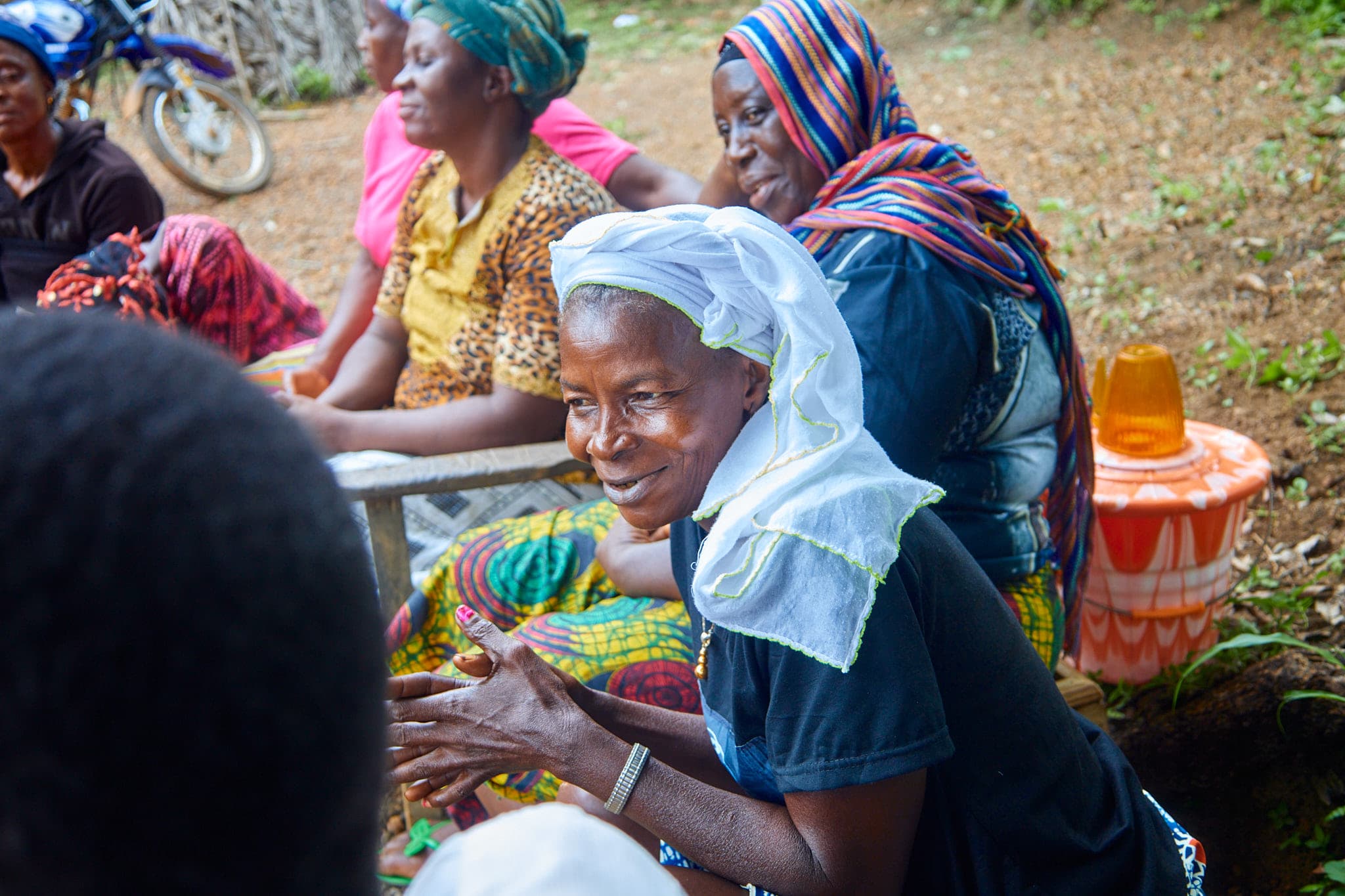
A woman smiling during a Muzambiringa community session in Sierra Leone

Challenge summary

Grant pool
Up to US$35,000
Start-ups accelerated
10+
Finalists funded
3+
Equity taken
None

Presented by

  • Muzambiringa
  • UNCDF

In partnership with

  • Bank of Sierra Leone
  • UNDP
  • Funded by the European Union

Why this challenge

Most of Sierra Leone is still cut off from formal finance

Financial institutions are concentrated in Freetown, Kenema and Bo. Reaching rural and under-served areas is costly, and most institutions have yet to build a business case for it.

The foundations are in place: a national payment switch, a regulatory sandbox and a fast-growing mobile money network. Yet cash still dominates retail payments in rural areas, where infrastructure constraints, agent liquidity shortages and digital literacy gaps hold back adoption.

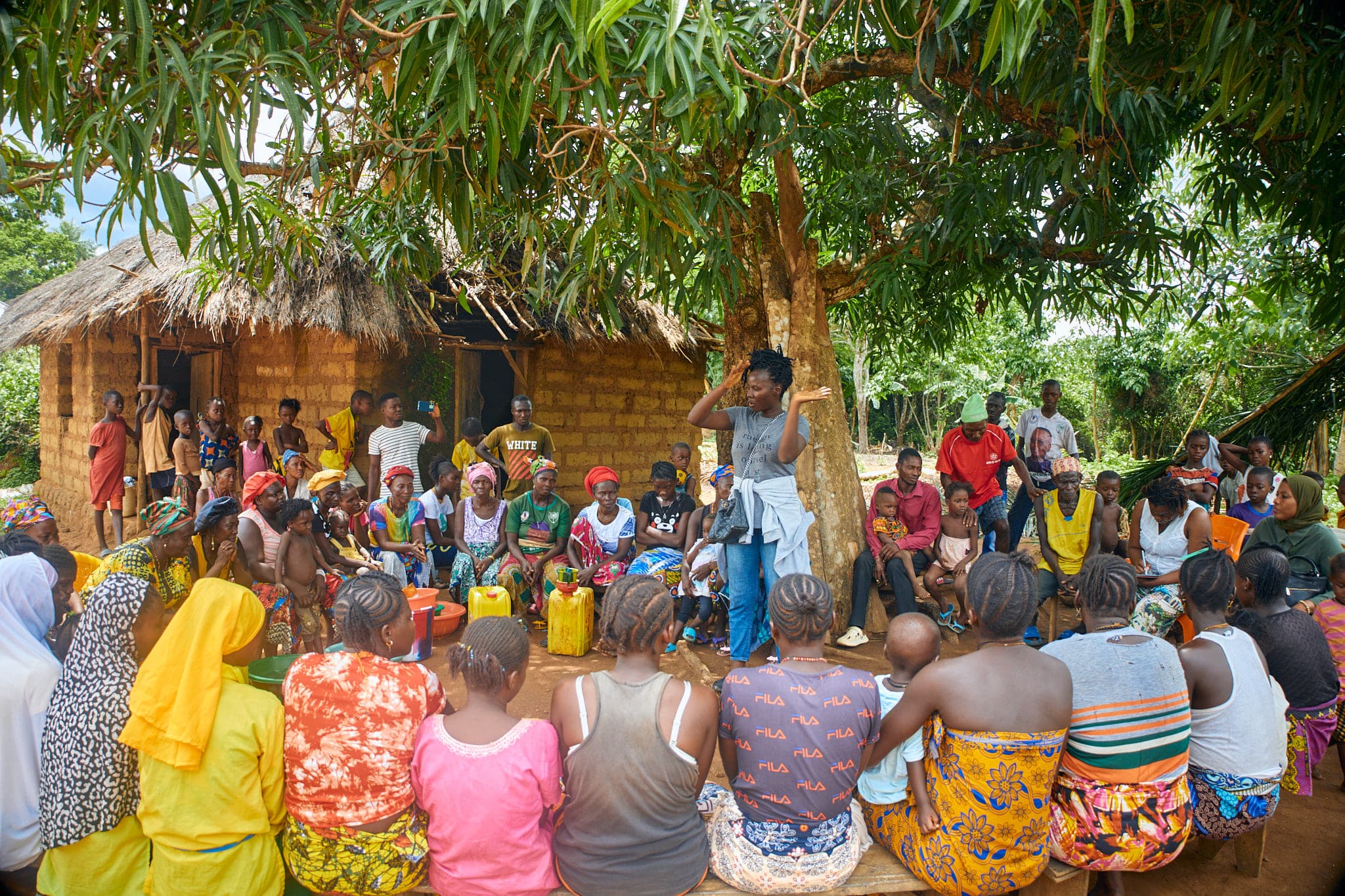
Community members gathered under a tree for a Muzambiringa session in Sierra Leone
Financial inclusion rate in Sierra Leone, according to the Global Findex 2024
39%
Active mobile money wallets across Orange Money, Afrimoney and QMoney
2.5M+
12 commercial banks, 17 community banks, 75+ microfinance institutions and 59 Financial Services Associations, mostly in three cities
160+
The year the National Payment Switch (SaPS) went live, linking banks and mobile money in real time
2023

About the challenge

Objective

To identify and accelerate early-stage fintech solutions, at prototype or minimum viable product (MVP) stage, that improve payment flows, financial management and formalisation for smallholder farmers and agri-SMEs, increasing the uptake of useful digital financial services at scale.

Salone Access to Finance

The Challenge is part of the Salone Access to Finance project, jointly implemented by the Government of Sierra Leone, the European Union and UNCDF. It contributes to the project’s aim of improving rural access to digital financial services for payments, deposits and banking, especially for youth, women and people with disabilities.

UNCDF in Sierra Leone

UNCDF is the UN’s capital investment agency for the world’s least developed countries. It began its financial inclusion work in Sierra Leone in 2010 and showed what large-scale outreach could do during the 2014–2015 Ebola crisis, when it helped pay Ebola Response Workers. It works with the Bank of Sierra Leone, banks and other providers towards an inclusive, interoperable payments ecosystem, in line with the National Financial Inclusion Strategy 2022–2026.

Use cases

Seven areas we want to see

Solutions should focus on agri digital financial services: digital payments and agritech use cases, including but not limited to these.

  • Digital payments

    Digitising payments from buyers, such as agribusinesses and cooperatives, to smallholder farmers.

  • Savings

    Digitising how farmers spend and save.

  • Insurance

    Digitally enabled agricultural insurance services.

  • Credit scoring

    Platforms that assess farmers’ credit using alternative and multiple data sources.

  • Crowdfunding

    Online platforms that give farmers access to funds and credit from individuals.

  • Record keeping

    Tools that help farmers keep track of farming activities, such as expenses and revenue.

  • Digital transformation

    Solutions that digitise processes, create efficiencies and keep data that can power value-added services, such as financial services, for farming communities.

  • Building in one of these areas?

    Applications close 20 November 2026

    Apply now (opens in a new tab)

What you get

Two tiers of support

At least 10 shortlisted applicants

Accelerator programme

  • Technical assistance to refine product-market fit for agri-SMEs and smallholder farmers, with a focus on gender-inclusive design, offline capability and local relevance.
  • Mentorship and coaching from experts in digital finance, last-mile distribution, user experience and interface design, and interoperability.
  • Guidance on the behavioural nudges that drive digital adoption.

At least 3 finalists

Grant funding

Up toUS$35,000

  • Grants of up to US$35,000 in total, split among the local start-ups selected through a rigorous evaluation.
  • For digital solutions that address any of the seven use cases.
  • No equity taken

    The organisers take no equity as a condition of taking part.

  • Your IP stays yours

    Teams keep ownership of their intellectual property. Terms for any funded pilot or partnership are agreed separately.

  • Travel and logistics

    Applicants cover their own travel and logistics unless otherwise specified.

Who can apply

Eligibility

The Challenge is open to fintech and agri DFS start-ups in Sierra Leone. To qualify, your start-up must:

Mandatory

Your solution must be at prototype or MVP stage, and you must be able to give a demo.

Not eligible

Solutions not related to agricultural payments or financial services, and solutions already in large-scale commercial deployment.

  • Be legally registered and operating in Sierra Leone, with at least one year of operation
  • Be early stage, with at least a minimum viable product, and not yet profitable
  • Have raised no more than US$15,000 in grants, loans or private equity
  • Offer a solution for at least one of the seven use cases
  • Be willing to serve smallholder farmers and agri-businesses in rural communities
  • Be unable to access credit from formal financial institutions to scale its business model

Your application

What to include

Apply through the online form. Your application should cover:

  1. Problem statement

    The problem you solve, and for whom.

  2. Solution overview

    Your product and its core features.

  3. Target users and journey

    Who uses it, such as smallholder farmers, agri-SMEs or agents, and how.

  4. Business model

    How you make money, with your revenue assumptions and projections.

  5. Team profile

    Who is on the team, their roles and relevant experience.

  6. Stage and artefacts

    Your prototype or MVP, with a demo link, screenshots or a short video if available.

  7. Traction (optional)

    Any user testing, pilots or traction so far.

Selection

How applications are assessed

  1. Step 1

    Screening

    Applications are checked against the mandatory criterion. Only those that meet it move on to shortlisting.

  2. Step 2

    Desk review

    A technical review scores each application against the weighted criteria. Only applicants scoring over 70% are shortlisted.

  3. Step 3

    Accelerator and Demo Day

    Shortlisted start-ups join the accelerator and present at Demo Day. At least three finalists are then selected for grants.

Desk review criteria

  1. Relevance to the problem

    25% of the score

    How well the solution addresses at least one agri DFS challenge, such as smallholder record keeping or digital payments, with some evidence of adoption or demand.

  2. Business model and stage

    25% of the score

    A strong value proposition, clear revenue streams and demonstrated market demand, at a stage where the business can be supported to grow.

  3. Team strength and execution

    15% of the score

    An experienced, committed team with clear decision-making and accountability, able to build and scale the solution.

  4. Innovation and scalability

    15% of the score

    How unique the solution is, how it stands out in the market, and its potential to scale.

  5. Inclusivity and impact

    10% of the score

    Potential impact for agri-businesses, smallholder farmers and farming communities, including jobs created and the ability to attract follow-on funding.

  6. Sustainability

    10% of the score

    A clear path to long-term viability, and the ability to keep operating beyond the funding.

Applicants need a score above 70% to be shortlisted.

Key dates

Tentative timeline

Dates are tentative and may change.

  1. 20 November 2026

    Applications close

  2. Nov 2026

    Review and shortlist

    Screening and desk review, then the shortlist is announced.

  3. Late Nov 2026 – 8 Jan 2027

    Accelerator programme

    Technical assistance, mentorship and coaching for shortlisted start-ups.

  4. 15 Jan 2027

    Demo Day

    Shortlisted start-ups present their solutions.

  5. Jan 2027

    Grant selection

    Finalists are selected and grant contracts signed.

  6. From Jan 2027

    Pilots begin

    Winners kick off their pilots.

Expectations

What selected innovators deliver

Start-ups selected for the programme are expected to produce:

  1. A refined product roadmap and go-to-market plan
  2. A compliance and regulatory action plan, where applicable
  3. A pilot or partnership plan with partner institutions, if agreed
  4. A pitch deck and Demo Day presentation
  5. A short impact and metrics report after the programme, with quarterly reports for at least 8 months after Demo Day

Ready to apply?

Complete the online application form before the closing date. Have your documents and demo materials ready before you start.

Closes 20 November 2026

Questions?hello@muzambiringa.org